Bicol gata, Pangasinan bagoong, and a lifetime of putting the two in the same pan
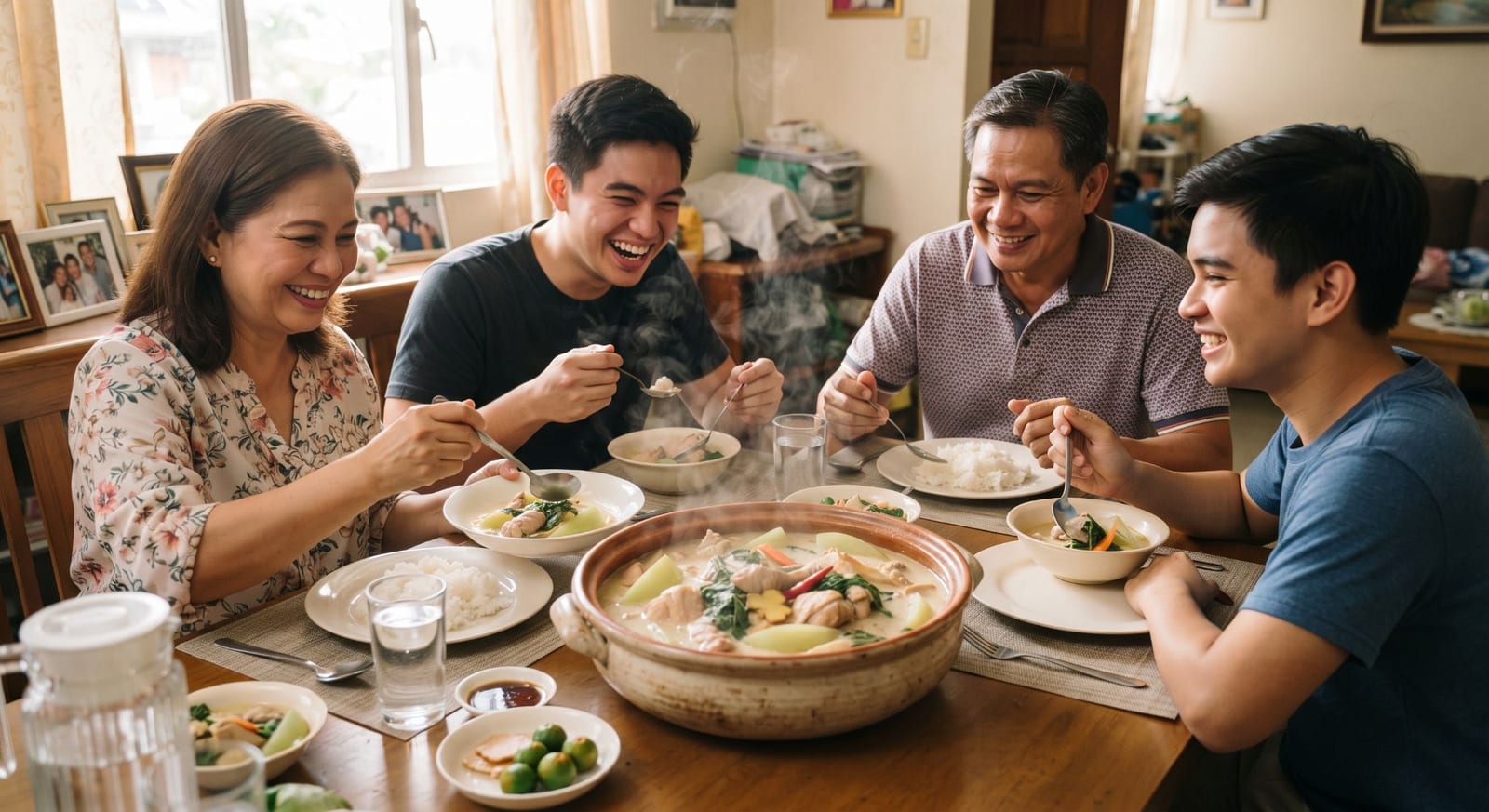
I am Pangasinense. My husband is Bicolano. Everything else in this post follows from that.
I could already cook when we married. I had been cooking since I was a child. But what I could cook was Pangasinan food, and Pangasinan food means bagoong. Bagoong in the pot. Bagoong in a small dish at the side of boiled vegetables, for anyone who wants more. Salt that came from fish and had opinions about it. That was the taste I understood.
Then I married a man from a province that puts coconut cream in nearly everything, and who is honestly puzzled by a vegetable that arrives at the table dry.
The vegetables went first
It did not happen as a decision. Nobody sat down and negotiated. I simply cooked what I knew, and then one day I cooked it with gata, and then it was never not cooked with gata again.
Sigarilyas. Eggplant. Kalabasa. Labong. Puso ng saging. Every vegetable I had learned as a child in a clear pot or a bagoong pot became ginataan na gulay, and stayed that way. I will go further than that. I put gata in chopsuey. Chopsuey is Chinese and came to us through everybody, and it has no business being ginataan, and nobody at my table has ever complained.
The bagoong did not leave, which is the part I like. It goes in early, a spoonful, before the coconut cream. What you get is not one region politely giving way to the other. It is salt from Pangasinan underneath and fat from Bicol on top, and the two of them hold each other up. Gata alone can go flat and sweet. Bagoong alone can be sharp. Together they behave.
Then the fish, then everything else
Pinangat, where I come from, is fish cooked in vinegar and nothing else. That is the whole dish and it is a good dish. We put gata in it. Lately, I discovered that there really are plenty of dishes with gata. But I was already doing fusion long before all these became available on the net.
Tinola, gata. Adobo, gata — near the end, after the vinegar has cooked off its sharpness, so the sauce turns pale and thick and clings to the meat instead of sitting under it. I know there are people who consider this a violation. They are welcome to their clear broth.
What I noticed over the years is that gata is forgiving in a way vinegar is not. Vinegar announces a mistake immediately. Coconut cream absorbs a small error and carries it. For a woman cooking dinner after a full day of teaching, that is not a minor quality.
Why it sits the way it does
There is a reason coconut cream behaves differently from other fats, and it is worth one paragraph.
Most of the fat we eat is long-chain. It has to be packaged and shipped through the lymph, and then it needs a specific carrier to be walked into the mitochondria before anything can be done with it. Coconut is largely medium-chain. Those go more or less straight to the liver and get burned for energy quickly, without waiting for the enzymes and carriers the long-chain fats depend on. Faster digestion, faster fuel. This is why a bowl of ginataan sits lighter than its richness suggests it should.
That is an explanation, not a health claim. Gata is still fat and still has calories, and a coconut is not a vitamin. But it does mean that the way half this country has been cooking for centuries makes reasonable sense in a body. It serves as a plant-based and lactose-free alternative to heavy cream in recipes while adding body to sauces and soups.
What is usually in my pot
Sigarilyas. The one I make most. Sliced thin on the bias, bagoong first, gata last, shrimp if there are shrimp.
Labong. Boil it first and throw that water away. Then gata. This is not optional.
Puso ng saging. Squeeze it with salt and rinse until the water runs clean, or it will be bitter and you will blame the coconut.
Kalabasa at sitaw. The kalabasa breaks down and thickens the sauce by itself. Very little else is needed.
Any fish. Vinegar, then gata after. Do not stir it hard once the cream is in.
A note about the gata itself: put it in late and keep the fire low. Let it boil hard and it will break into oil and curds. It still tastes fine. It just looks like something went wrong, and after enough years you would rather it did not.
And the children
Both of them grew up on this food. Both of them are in Manila now, with their own kitchens. They do not cook ginataan, but they love all food with gata. They always ask for ginataang tinola and shrimp cooked with gata whenever they come home.
I never set out to combine two provinces. I set out to feed a man from Bicol without abandoning the way my mother fed me.
The kitchen worked out the rest.
Comments (2)
Hi Mama Amy. This was a really interesting read. I'm sure there are more interesting recipes that were born because of the merging of you and your husband's cultures. Definitely looking forward to some recipe posts in the future 😁 (maybe even a cooking video)
I don't really write recipes, Lorna. I cook without measuring. I will think about doing videos in the future.
Leave a comment