Three weeks of rain, a word I made up, and the small tilapia I dry in the sun
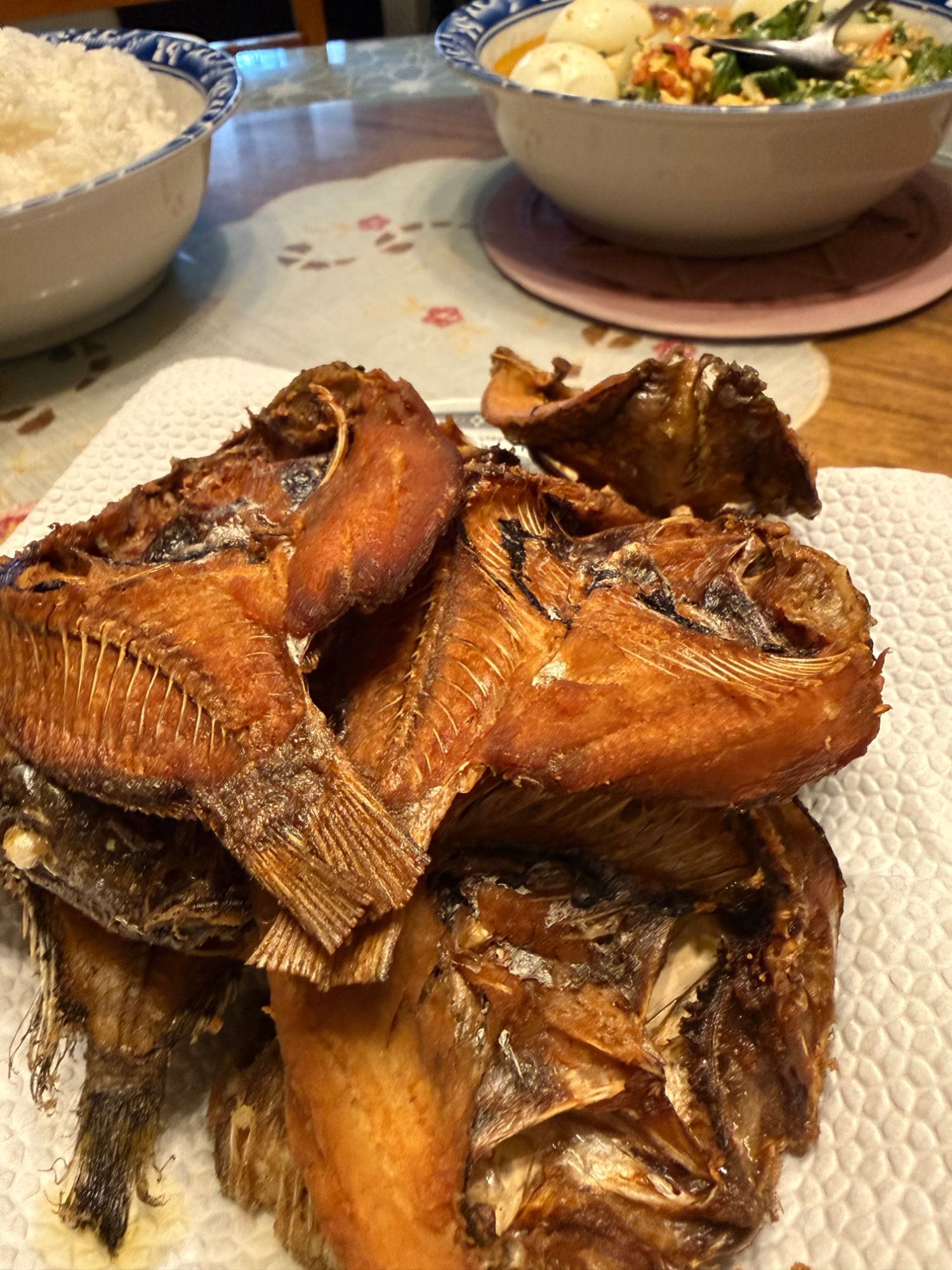
There has been no sun for three weeks, and so there has been no tilanggit.
I check the sky in the morning the way other people check the news. Grey again. Grey with that flat softness that means it will not be clearing by noon either. And I stand there with my coffee doing the math every household does in this weather — what is in the freezer, what will keep, what simply cannot be made until the light comes back.
Tilanggit is the thing that cannot be made.
The word is mine, and it is not a real word
Danggit is rabbitfish. Split down the back, salted, dried in the sun, then fried until the edges go brittle and shatter against your teeth. Everyone in this country knows what it tastes like next to garlic rice.
But rabbitfish does not come to our market. Not fresh, not reliably, not in the small sizes you actually want for drying. For years I treated that as a minor permanent loss, the way you do with things that are simply not sold where you live.
What we do have is tilapia. Plenty of it, and cheap, and the small ones — the ones too modest to bother frying whole for dinner — are almost exactly the size danggit is supposed to be.
So, tilapia, handled like danggit. Tilanggit. I made it up. I have been saying it long enough now that the rest of the house says it too, without smiling, which is how a made-up word quietly becomes a real one.
It is barely a procedure
Butterfly the fish. One cut along the back, opened flat so it lies like a small book. Gut it, rinse it well, and then salt it.
Then the sun does the rest.
That is honestly the whole method, and I want to say it plainly because people assume drying fish is a craft, something that needs a grandmother standing over your shoulder. It does not. It needs salt, a flat surface, and a sky that cooperates. Leave it the whole day, and that’s it.
The salt is not there for flavour, or not mainly. Salt pulls the water out of the flesh, and the sun takes the rest, and what you are left with is a piece of fish too dry for anything to live in. That is the principle behind every preserved food in every hot country — take away the water and nothing can grow. The taste is a side effect of the safety. A very good side effect.
What I eat it with
Tilanggit, for me, is a side dish. It is not the meal and it was never meant to be. A piece or two, salty and crisp, set against something large and green.
Dinengdeng. The broth is light and vegetal and a little bitter, and it wants something sharp beside it. This is the pairing I think of first, every time.
Pinakbet. Richer, with the bagoong already in it, so a smaller piece goes further. Still worth having on the plate.
Plain sliced tomatoes. Which sounds like nothing and is not nothing. Cold tomato, the salt already carried in by the fish, hot rice underneath. There are mornings I want this more than I want anything that was actually cooked.
Rice under all three, obviously. That is less a suggestion than a description of how the food is eaten.
About the salt
I will say this once and then leave it alone.
Dried fish is salty by design. The salt is the preservation, not a seasoning you can quietly dial down without losing the thing itself. So if someone in your house is watching blood pressure, or has kidney disease, tilanggit is a food to portion rather than a food to surrender.
Eat it the way it has always been eaten here — which is the old habit getting it right without needing the physiology explained. A small piece against a big plate of vegetables. The trouble is never the tilanggit. The trouble is the tilanggit becoming the meal.
You can also soak it in water for a few minutes before frying, if you want to take some of the edge off. You lose a little crispness that way. In some days, that is a fair trade.
And so I am waiting
There is a particular restlessness that comes with three weeks of rain. The laundry does not dry. The floors stay tacky underfoot. You begin to notice how many of the things you know how to do quietly depend on the weather, which is not something that occurs to you at all when the weather is fine.
The tilapia is easy enough to get. The salt is in the cabinet. The space is there, and so is the whole clear afternoon, whenever it decides to arrive.
I am only waiting for the sun.
Tomorrow, maybe.
Comments
No comments yet. Be the first to write to Dra. Amy.
Leave a comment