Why a child's medicine is dosed by weight, not by the age printed on the box
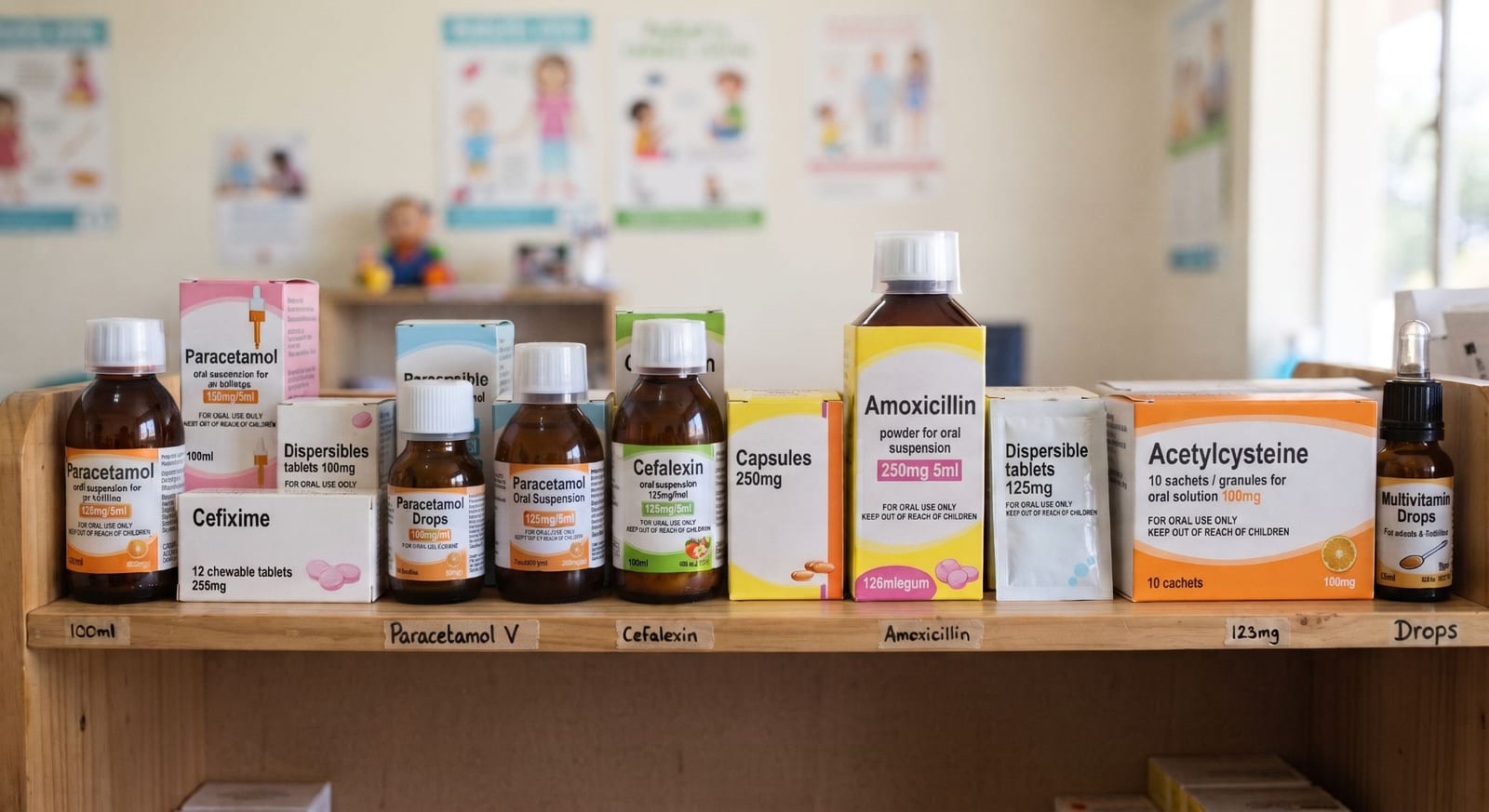
A mother came back to my clinic with the prescription I had written for her two-year-old.
The pharmacist, she said, told her I had written the wrong one.
A child that age should be on drops, not a suspension. And whatever the doctor wrote, she should follow the dose printed on the box, the one listed for the child's age.
I will admit my first thought was not a calm one. Then I sat down with the mother and explained what nobody at the counter had told her. A child's medicine is dosed by weight. Not by age.
Two children, same birthday
Picture two two-year-olds. One is chubby, the other is lean. Put them on a scale and there can easily be four or five kilos between them.
Every child's dose is written as milligrams per kilogram of body weight. So if both children get the same dose because they have the same birthday, one of them is getting the wrong amount. Either the heavier child is underdosed, or the lighter child is overdosed. There is no version where both are right.
The chart on the box is not wrong, exactly. It is an average. It was written for a child the manufacturer has never met, at a weight somebody assumed. Your child may be that child. Very often she is not.
That is why a doctor weighs a child before prescribing. The scale is not a formality. It is the first line of the computation.
How the computation works
There are two steps, and both matter.
First, the dose. The milligrams per kilogram for that medicine, multiplied by the child's weight, gives the milligrams the child needs.
Second, the volume. Those milligrams have to be turned into milliliters, and that depends entirely on how strong the preparation in the bottle is. The same medicine comes in different strengths:
Drops, 100 mg per ml. The most concentrated. The volume is small, which is why drops are made for infants who cannot manage much more than a dropperful.
Suspension, 125 mg per 5 ml. That is 25 mg in every milliliter, a quarter of the strength of the drops.
Suspension, 250 mg per 5 ml. Twice as strong as the 125, still only half as strong as the drops.
Say a child needs 150 mg per dose. That is 1.5 ml of the drops. It is 6 ml of the 125 suspension. It is 3 ml of the 250.
Same medicine. Same dose. Three different volumes.
So a 125 mg per 5 ml suspension is perfectly correct for a two-year-old, as long as the volume was computed for that preparation. The age of the child does not decide which bottle to use. The arithmetic does.
Where the real danger is
Not in the suspension. In switching bottles without redoing the math.
Suppose that mother had taken the pharmacist's advice, bought the drops, and kept giving the 6 ml I wrote for the suspension. Her child would have received 600 mg instead of 150. Four times the dose.
The reverse is quieter but still harmful. A child given 1.5 ml of suspension when the volume was meant for drops gets a quarter of what she needs. The fever does not come down. The infection is not treated properly. Everyone concludes the medicine does not work.
For some medicines, paracetamol among them, an overdose injures the liver silently, and a child can look perfectly well for the first day. This is not a mistake you want to discover late.
So a few things for any parent holding a bottle:
Read the strength, not only the name. The same brand can come in two or three concentrations that look almost identical on the shelf.
Use the syringe or dropper that comes with it. Kitchen spoons are not measuring instruments. They vary more than people expect.
Know your child's weight. Children gain quickly. A dose computed six months ago may already be too small.
If the bottle in your hand is not the one written on the prescription, ask before you give it. Go back to the doctor. It takes a few minutes.
About the pharmacist
I want to be fair here, because pharmacists are my allies more often than not. A careful pharmacist catches a misplaced decimal, an allergy, a drug that should not be taken with another. When one of them sees something that worries her on my prescription, I want the phone call. That is the system working.
That is not what happened here.
She did not call me. She told the mother the doctor was wrong, and recommended a switch that, done the way she described, could have quadrupled the dose. She had the box. I had the child on the scale.
A question about a dose belongs in a conversation between the two people who can compute it. Not across a counter, to a worried mother holding a sick child.
The box knows the medicine. It does not know your child.
Comments
No comments yet. Be the first to write to Dra. Amy.
Leave a comment