Race cars on the floor, a screen at the table, and what a child loses when someone else does the imagining
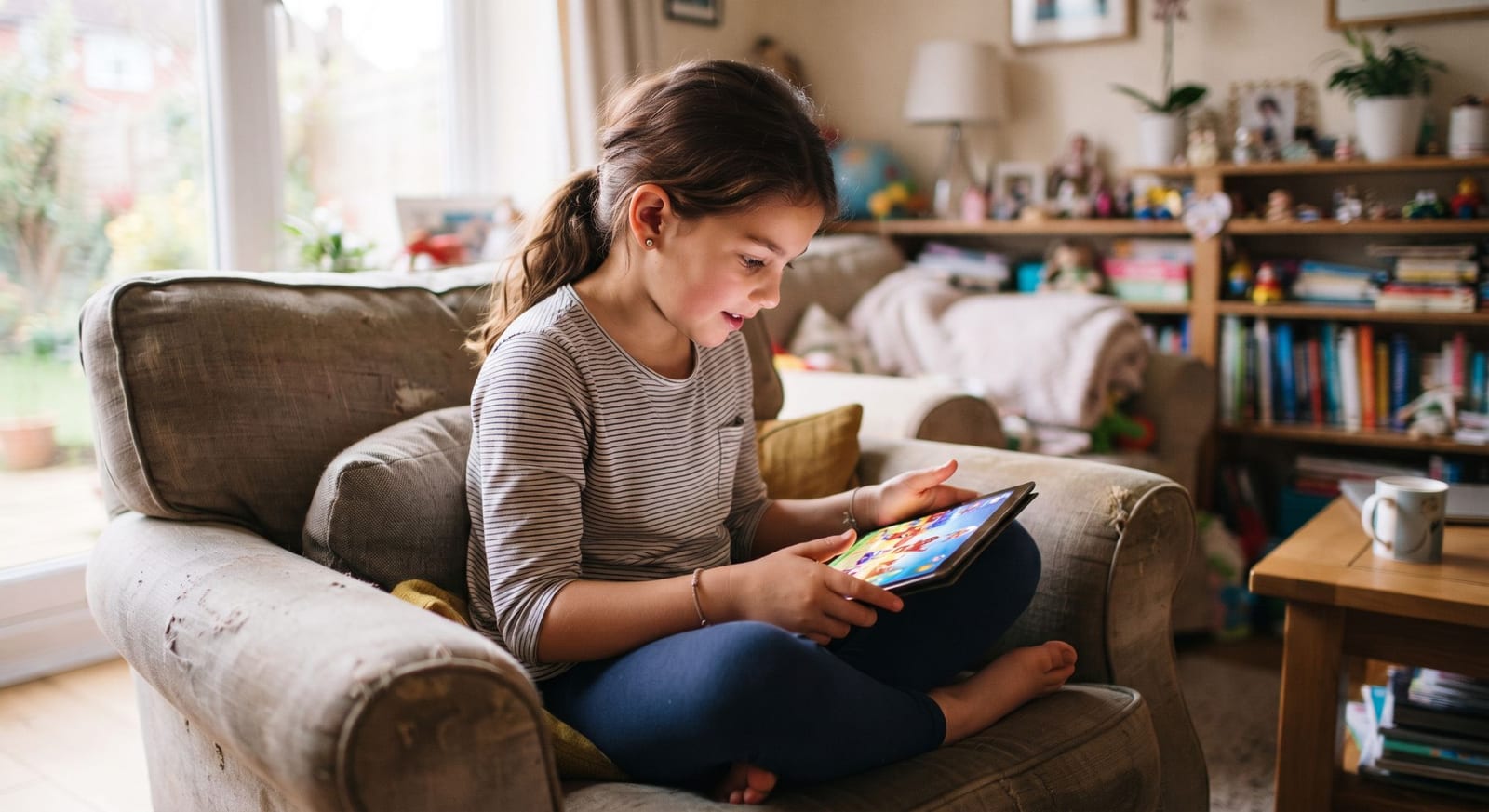
The yaya of this generation does not sing, does not scold, and never gets tired.
It is a screen.
You have seen it too. A child in a waiting room, head bent, thumb moving. A child at the dinner table with a phone propped against the water glass, eating whatever is put in front of him without looking at it. A child in the back seat, silent for the whole drive. The adults around them are relieved, and I understand the relief. The child is not noisy. The child is not roaming. The child is, for the moment, handled.
But handled is not the same as playing.
What play looked like in our house
I wrote before about our playroom, so crowded with race cars, police cars, trucks, Superman and Batman that there was almost no space to walk.
What I did not say is how much noise came out of it.
The game I remember best is the one where they were soldiers. They had their guns, and they came down from a helicopter, and they went into battle.
There was no helicopter, of course. There was a playroom floor and two boys who had agreed there was one. They decided how high it flew, where it landed, who jumped first, and who the enemy was that afternoon.
None of that came printed on a box. They made it up, out loud, together.
What traditional play actually does
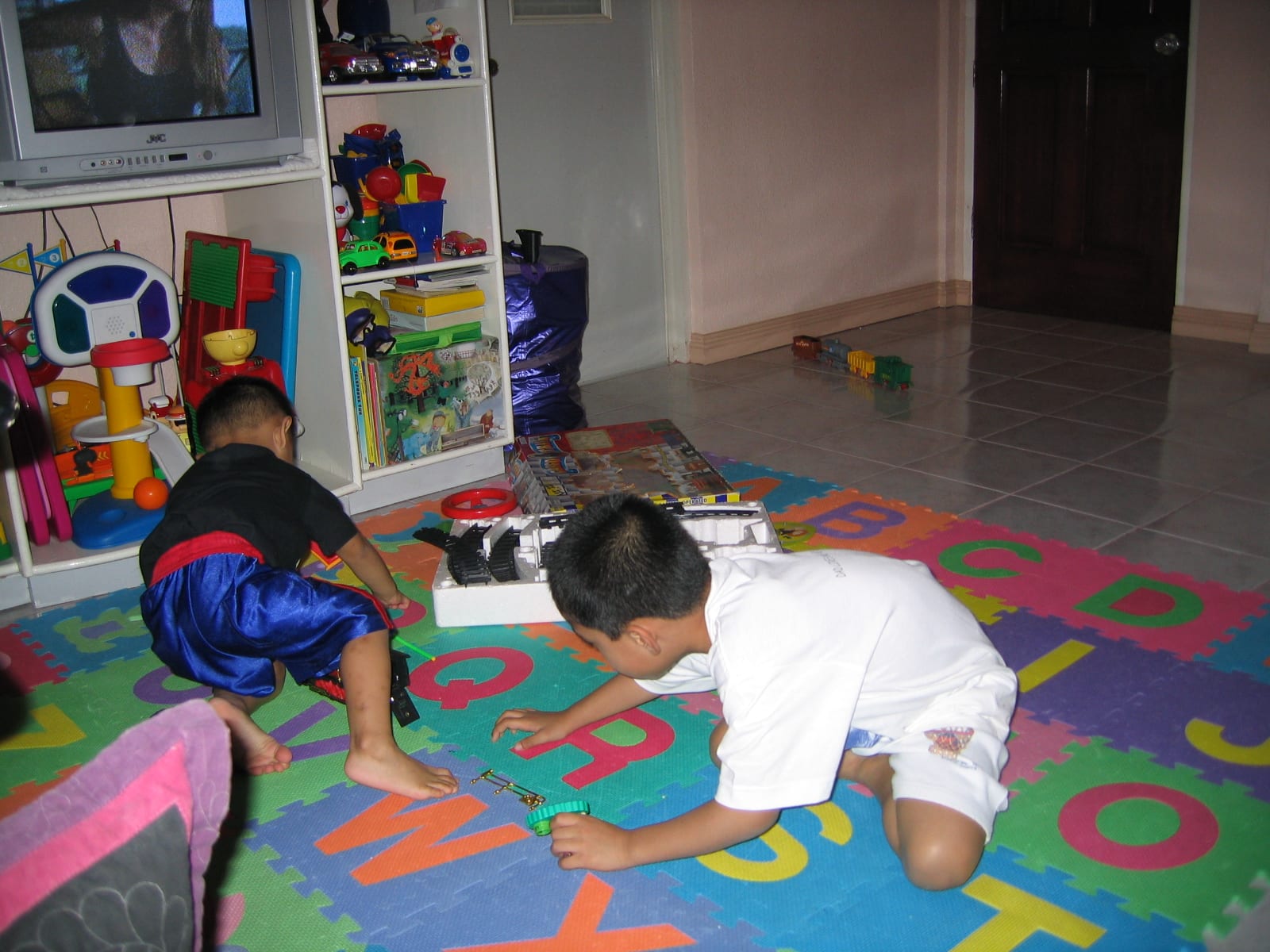
A child playing with real things is using all of himself. His hands learn the weight of a toy truck, the sharp edge of a block, how much farther a ball rolls on tile than on grass. His eyes and ears are busy with the other child, who wants something different from what he wants.
That other child is the point. You cannot play habulan alone. You cannot play bahay-bahayan for long without somebody to be the father. Playing with other children forces sharing, turn-taking, waiting, asking, losing, and trying again. It forces them to talk. These are not extras. They are the first practice a person gets at living with other people.
And it builds imagination, which is the part I want to stay on.
Whose imagination is it
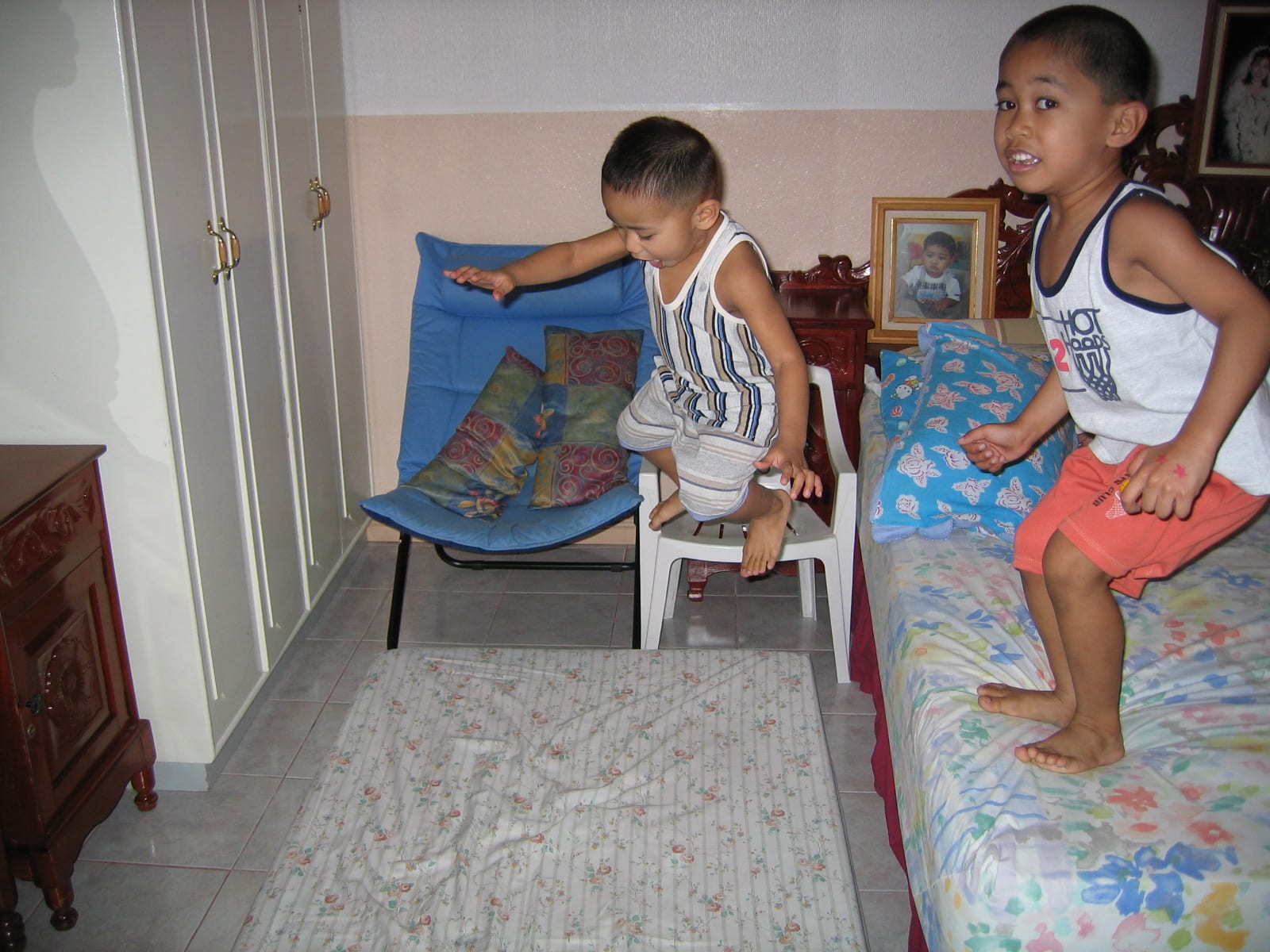
When a child picks up a stick and calls it a sword, nobody has told him what the sword looks like. He supplies it. When he jumps from a helicopter that is not there, he has to decide how far down the ground is. Every gap in the toy is a gap the child must fill himself, and the filling is the work.
A video fills every gap for him. So does a tightly structured app, where the colors, the sounds, the story and the correct next move have all been decided by someone far away. The child is busy, yes. But he is consuming someone else's imagination, not generating his own.
That is not play, exactly. It is watching someone else play.
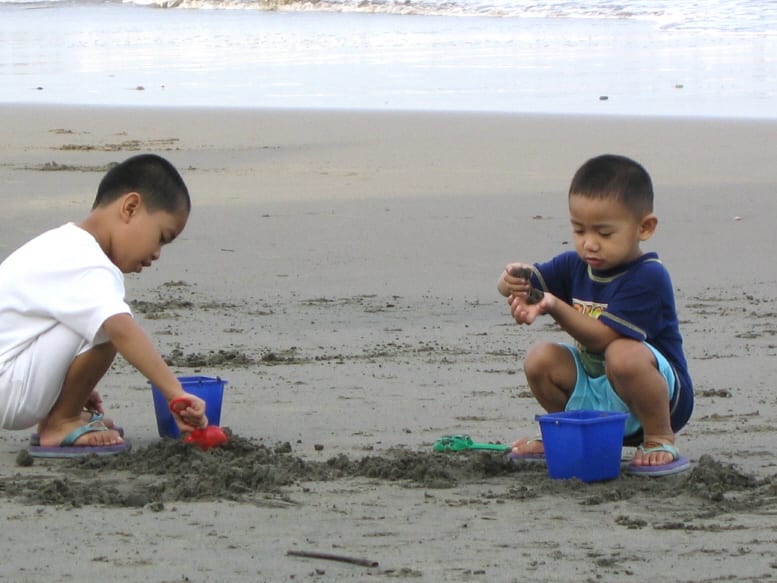
Imagination grows the way most things in a growing child grow: with use. A child who is always handed the finished picture gets very little practice painting one, and creativity follows the same road. This is part of why the guidelines are so strict for the youngest. The World Health Organization recommends no screen time at all for children under two, and no more than one hour a day from two to four. Less, they add, is better.
The cardboard exception
I am not asking anyone to throw the tablet away. Screens are part of the world these children will live in, and some of what is on them is good.
There is one kind of screen time I would cheer for. It is the child who watches a video about a robot, then goes looking for an empty box, scissors, tape, and his mother's permission, and builds his own. The robot he makes will be lopsided. One arm will be longer than the other. It will do nothing the robot on the screen could do.
It is still the better robot, because he made it. And then he plays with it the way my boys played with their trucks: on the floor, out loud, changing the story as he goes.
That is the combination I would want for any child. Let the screen give him the idea. Then put the screen down and let his hands finish it.
What I would tell a young mother
Keep the gadget for when it is really needed. Not at the table. Not every time there is a wait. A child who is bored in a waiting room for ten minutes will usually find something on his own: a pattern on the floor, a game with his fingers, a question for you. Boredom is where a great deal of imagination begins.
Keep a box of real things within reach. Blocks, cars, crayons, old boxes. They do not need to be expensive. Ours were, and I will admit now that the cardboard would have done nearly as well.
And accept a little noise. A child who is playing properly is rarely quiet.
The screen will keep him still.
Let him play with his toys anyway.
Comments
No comments yet. Be the first to write to Dra. Amy.
Leave a comment