Why older adults need weights, not just zumba
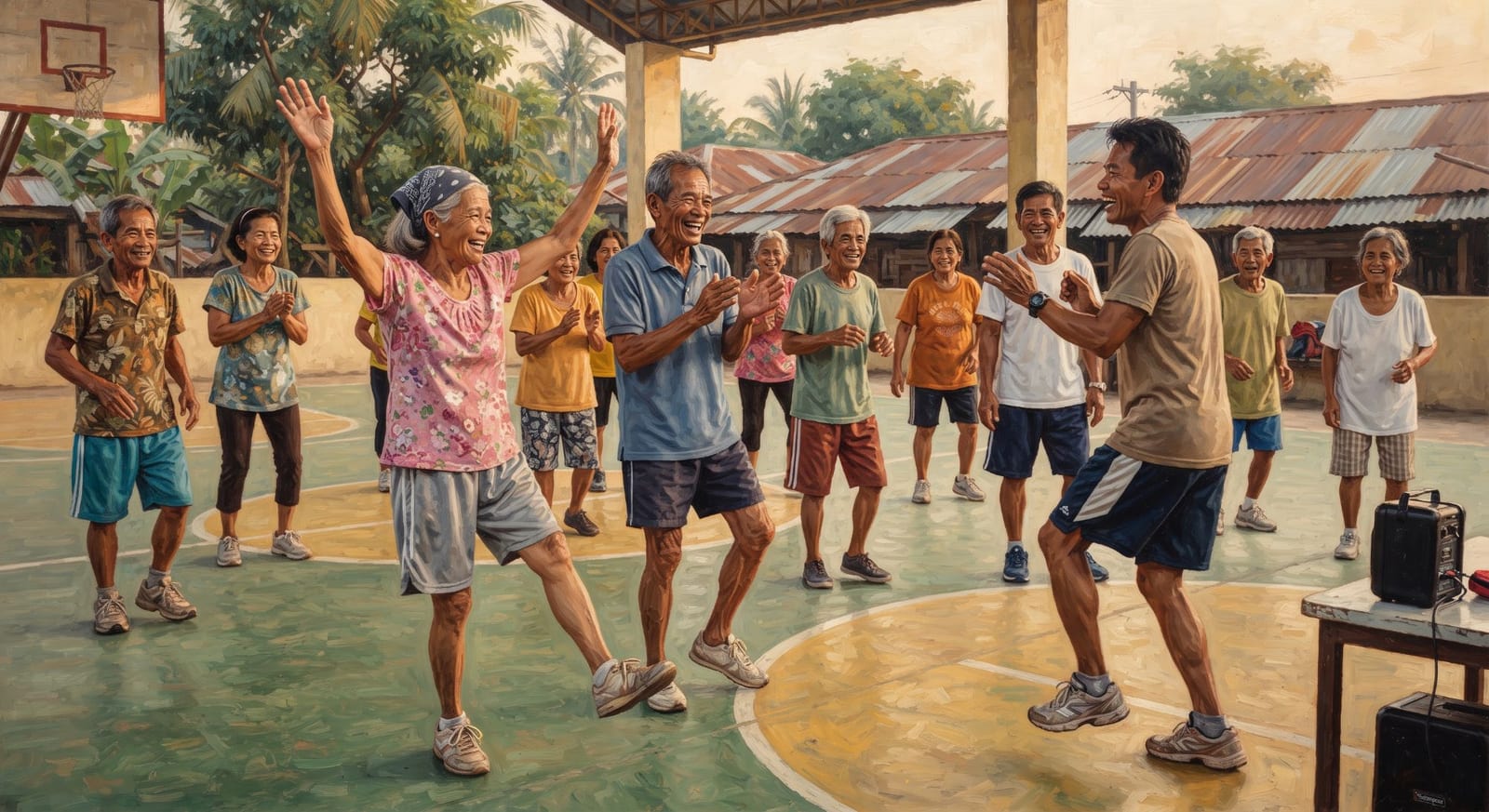
Walk past any covered court early in the morning and you will hear the music before you see the dancers.
Zumba, line dancing, a little cha-cha. Most of the people moving to it have grandchildren. I am glad they are there. More older people exercise now than at any time I can remember, and every one of them is doing better than the neighbor who is still sitting at home.
But look at the legs.
Many of them are dancing on thighs that have gone thin and soft, on knees that wobble at the turn, on bones that would not survive one bad landing. Ask them about weights and the answer is almost always the same. Dancing is enough. Anyway, I am already old.
That second sentence is exactly why they need the weights.
Thin is not the same as strong
Muscle starts leaving us earlier than most people think. From around the age of thirty we lose a few percent of it every decade, and after sixty the loss speeds up. Doctors call this sarcopenia. It is rarely named at a check-up, which is part of the trouble. It arrives quietly, one stair at a time.
And it is easy to mistake for something good. The arms get slimmer. The pants get loose. People are pleased.
They should not be. What they are seeing is not thinness. It is atrophy. The muscle is wasting, and fat often moves in where it used to be, so the number on the scale may barely change while the strength underneath it drains away.
The bones follow the muscles. Bone is living tissue, and it keeps itself dense only when something pulls and presses on it. Take that load away and the bone thins too. The muscles become thin. The bones become crunchy.
Why dancing is not enough
Dancing is good for the heart, the lungs and the mood, and I would never tell anyone to stop. But it asks the muscles to move a body they already know how to move. After the first few weeks, it stops asking for more.
Muscle grows only when it is asked to do something slightly harder than it comfortably can. That is what a weight provides. A dumbbell, a resistance band, a filled water bottle, your own body rising from a chair. The method matters less than the load.
What lifting gives back
Strength. Lifting builds muscle, and muscle is what lets you climb into a jeepney, carry the groceries, and get up from the floor after playing with a grandchild. Older adults who train regularly gain real strength, even in their seventies and eighties. The muscle is not gone for good. It is waiting to be asked.
Balance. Strong legs and a strong trunk hold you steady. Strength training improves balance, stability and coordination, which is what keeps a stumble from becoming a fall.
Bones. When a muscle pulls on a bone under load, the bone responds by laying down more mineral. This is how lifting slows bone loss and lowers the risk of fracture. In the elderly, a hip fracture is not a small injury. Many never walk the same way again.
Metabolism. Muscle burns energy even at rest, and it pulls sugar out of the blood. More muscle means a higher metabolic rate, more calories used, and better control of blood sugar.
The brain. Exercise increases blood flow to the brain, and older adults who strength-train have shown better memory and sharper thinking in studies. Regular exercise is also linked with a lower risk of dementia. The research is still growing, but it keeps pointing the same way.
How to start
Start light. Lighter than you think you need. Choose a weight you can lift ten to fifteen times with good form, slowly, without straining.
Then pay attention. One day that weight will feel lighter than it used to. That is the signal. Add a little more, and begin again.
Two or three sessions a week is enough. Work the legs, the back, the chest and the arms. Breathe out as you lift, and never hold your breath. Keep the dancing. Add the weights to it.
Who should be careful
If you have heart disease, uncontrolled high blood pressure, or a recent fracture, see your doctor before you start. If you already have osteoporosis, avoid heavy bending and twisting of the spine under load, and learn the movements from someone who knows how to teach them. Pain in a joint means stop and adjust, not push through.
None of these is a reason not to lift. They are reasons to lift carefully.
The freedom part
The first benefit people notice is rarely the one they expected. It is not the arms. It is the stairs. Standing up without a hand on the table. Walking to the market and back without stopping to rest. Carrying heavier bags of groceries, and a lot more.
Old age takes enough away on its own. There is no need to hand it the strength of your body as well.
Pick something up.
Comments
No comments yet. Be the first to write to Dra. Amy.
Leave a comment