One chicken from a patient, then another, then another — and eventually a yard full of tinola
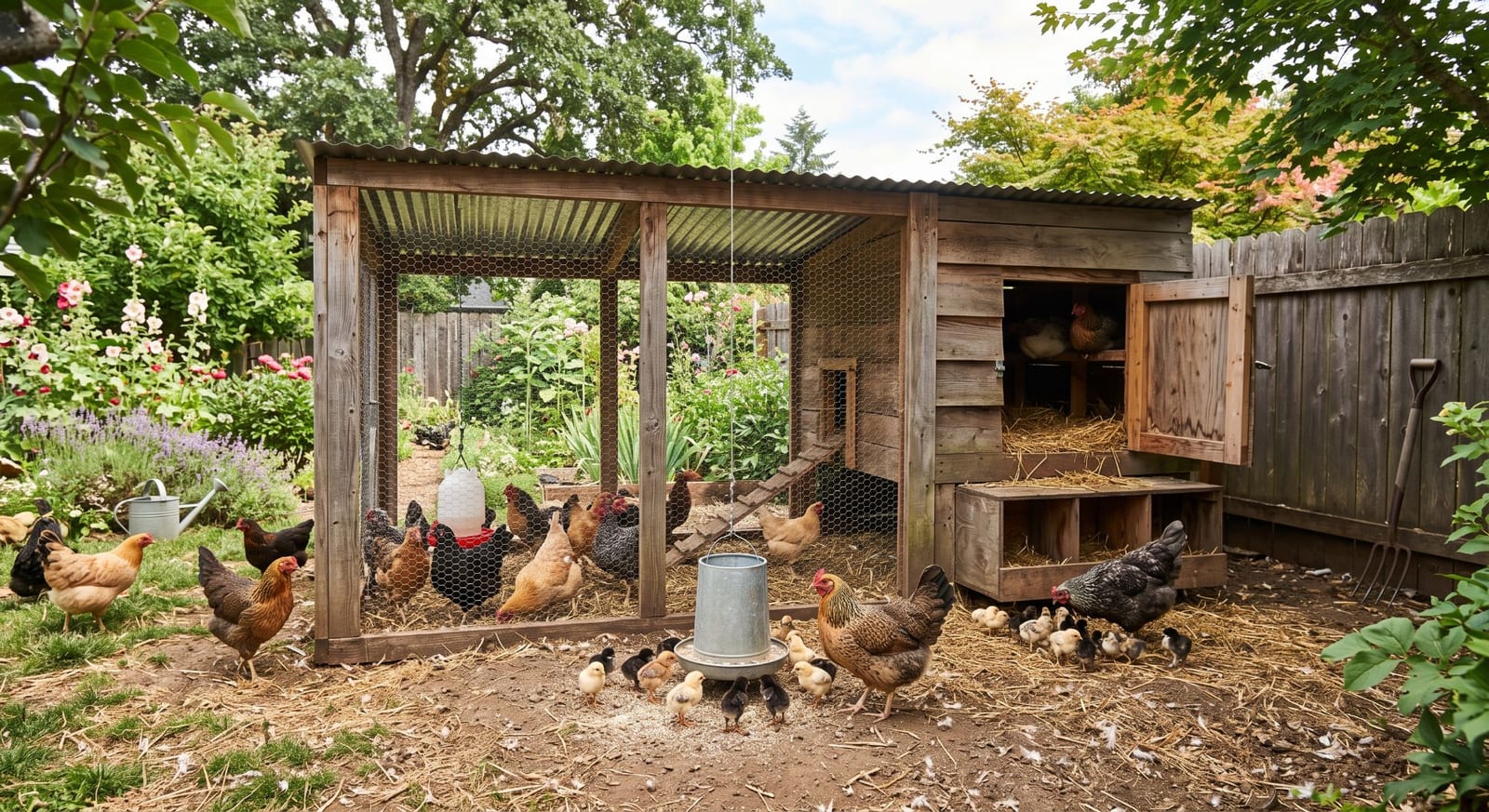
We never decided to keep chickens.
There was no family conversation about it. No afternoon spent reading about breeds nor about feeds, no moment when somebody said we ought to have a coop. A patient gave us a chicken. That is the entire origin of the story. It was before the pandemic, back when a year still had a shape you could see the end of, and the chickens arrived the way things arrived here — handed over without ceremony, and without leaving you room to refuse.
So, we had a chicken.
Then another patient gave us one. Then someone gave us one after that, and then another. I cannot tell you the order anymore and I am not certain there was one. What I remember is that at some point I stopped counting, and shortly after I stopped counting the chickens began producing chicks of their own. There were chicks in the yard. Nobody had planned for chicks either.
How a coop happens
I do not think anyone builds a chicken coop on purpose. Not the first one.
What happens is that you put up something small and provisional to keep one bird from wandering off, and then you add wire to it, and then a roof because of the rain, and then more space because there are more birds this month than there were last month. You do this for a couple of years without ever once calling it a project. Then one morning you are standing in front of a structure with a door and a roof and a floor that you sweep, and you understand that you have built a coop, and that you never actually decided to.
It grew the way the flock grew. By accident, and by other people's generosity.
The Brahmas
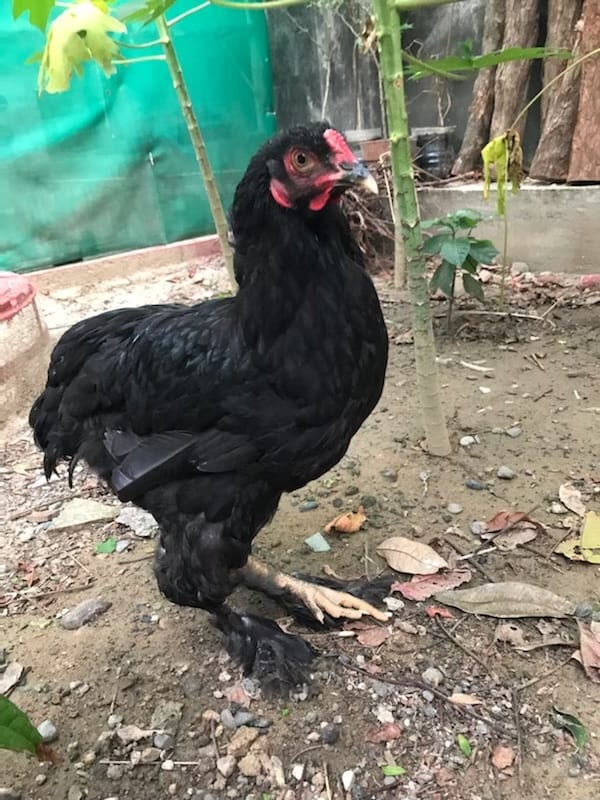
Then somebody gave us two Brahmas.
If you have not seen one, they are enormous, and the feathers go all the way down the legs so the bird looks like it is wearing trousers. They were harder to raise than our natives — harder in a way that asked for real attention rather than the benign neglect a native chicken forgives you for. We lost them probably because of the heat, or the feeding. None of us really knew.
But they paid us back in eggs. Plenty of eggs, steadily, more than the natives ever gave. For a while those two were the most productive members of the household.
About the ducks
Then a patient gave us ducks.
At that point the yard had reached its limit, and this is the part where I have to be plain: our space cannot hold everyone. A coop that grew by accident still has walls. So we accepted the ducks, but we accepted them as food rather than as residents, and that is what became of them.
I know how that reads to some people. But an animal in a crowded yard needs room in order to be well, and keeping one badly out of tenderness is not kindness. It is a way of feeling better about yourself while the animal does worse.
Why the native ones make the better tinola
What we have now are the natives. Plenty of them.
And we do kill them, often, for tinola. I am not going to be delicate about it. The chickens were always going to be food, and the pot is where most of them end up.
Native chicken makes a better tinola than anything that comes home in a tray, and the reason is not sentiment. It is muscle. A bird that spends its life walking and scratching and getting out of the way of other birds builds working muscle, and working muscle carries far more connective tissue than the soft, fast-grown meat of a commercial chicken. Connective tissue is collagen. Give it ginger and a low, patient simmer and enough time, and that collagen becomes gelatin, and the gelatin gives the broth a body you cannot fake with a cube. That is why the soup coats the spoon. That is why it tastes like more than hot water and salt.
The meat is firmer, too. You have to chew it. That is not a defect either. It is the taste I remember from being a girl, before chicken came to mean something uniform and pale under plastic — back when the bird in the pot had been alive in somebody's yard that same morning.
I did not know then that I was eating anything special. It was only chicken. It was what there was.
Twenty more
We are looking forward to about twenty more tinola adventures. I said that out loud not long ago, and then I heard myself say it again, which is usually how I find out that something is true.
Twenty more pots. Twenty more afternoons of ginger and steam and somebody wandering into the kitchen to ask how much longer.
The coop was never a plan. Neither is the counting. But I am counting.
Comments
No comments yet. Be the first to write to Dra. Amy.
Leave a comment