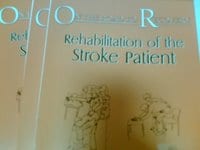
Stroke is a common condition here in the Philippines. My grandmother for one had been bedridden after her second stroke until she finally died more than a year after. Fortunately, my mom is a retired nurse. She was the one who took care of my grandma from the time half of her body became paralyzed until the time she finally rested.
In the photo above is a booklet given to doctors by a pharmaceutical company. We use these booklets to explain to patients how to take care of stroke patients outside the hospital. The booklet serves as guide to cargivers of stroke patients on the proper handling of these patients. Since not all caregivers are given this, I would like to share the contents of this booklet to my readers in the hope that it can be of assistance.
I. Arrangement of the patient's room:
The bed of the patient must be arranged in such a way that the normal half of his body is near the wall and all activities take place on the paralyzed side. This is so that the patient will receive maximum stimuli on the paralyzed side.
II. Lying on the paralyzed side:
The bed must be completely flat. The head must be comfortably stabilized. The trunk is slightly backwards and is stabilized by a pillow in the back and the bottom. The paralyzed shoulder must be brought forward and externally rotated. The paralyzed arm is on 90 degrees flexion, completely supported on an arm table next to the patient's bed, and the elbow as straight as possible and the palm upwards. The paralyzed hip must be in extension with the knee slightly bent. The normal arm must be lying on the trunk or on a pillow. The normal leg and foot must be in stepping position on a pillow with the knee and hip slightly bent.
III. Lying supine:
With the bed completely flat, the head must be on a pillow, not in flexion. Both shoulders must be stabilized by a pillow. The paralyzed arm must be lying on a pillow slightly away from the trunk with the elbow and fingers straight, wrist extended. The paralyzed hip must be in extension and stabilized by the pillow where the arm rests. (To be continued)
Comments
No comments yet. Be the first to write to Dra. Amy.
Leave a comment