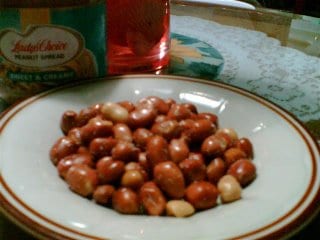
Peanut is actually a legume seed related to peas and other beans. It is a ground plant with the pod originating from the stem. Because of its heavy weight it bends down towards the ground, burrows, and mature.
Peanuts are available all year round. It is a very healthy food and rich in protein hence a good source of energy. It is also high in fats. Almost 1/2 of its fat content is in the form of monounsaturated fats. This monounsaturated fats is in the form of oleic acid, the type found in olive oil which has high health promoting effects. It also contains high amount of magnesium, folate, niacin, Vitamin E, fiber, copper, and arginine. All of which play a role in decreasing cardiovascular disease. Its high niacin content also protects us against age-related decline in brain functioning and intellectual activity. Studies also show that it can help prevent ocurrence of gallstones.
Peanut is also rich in antioxidants which serves as protection from cell damage. This phenolic antioxidant called resveratrol is the same antioxidant found in red grapes which helps in the prevention of arterial plaque formation.
See there are so many benefits from eating peanuts or peanut butter which is everybody's favorite sandwhich filling. An ounce of this nut a day decreases heart disease risk and improves levels of blood lipids. It is very easy to love peanuts. Once you start munching them, it is very hard to stop!
Comments
No comments yet. Be the first to write to Dra. Amy.
Leave a comment