What a physiology teacher now knows about sleep, growth, and the summer afternoons I spent outside

My mother had one warning she repeated every summer. If I did not sleep in the afternoon, I would not grow tall.
I did not sleep in the afternoon.
Summer afternoons were for playing, and playing then meant being out of the house. Hide and seek. Hopscotch. Skipping rope. Jack's stone. Marbles. We did not need much in the way of toys. A rope, a few stones, a handful of leaves, and enough children on the street to make two teams.
Those games were loud. Somebody was always shouting, somebody was always running, and nobody ever seemed out of breath enough to stop. By the time the light went and I walked home, I was tired all the way down and dirty enough that my mother had something to say before I reached the door.
Then I slept like a stone.
It took me years, and a long career teaching Physiology, to understand that my mother was half right.
Where growing actually happens
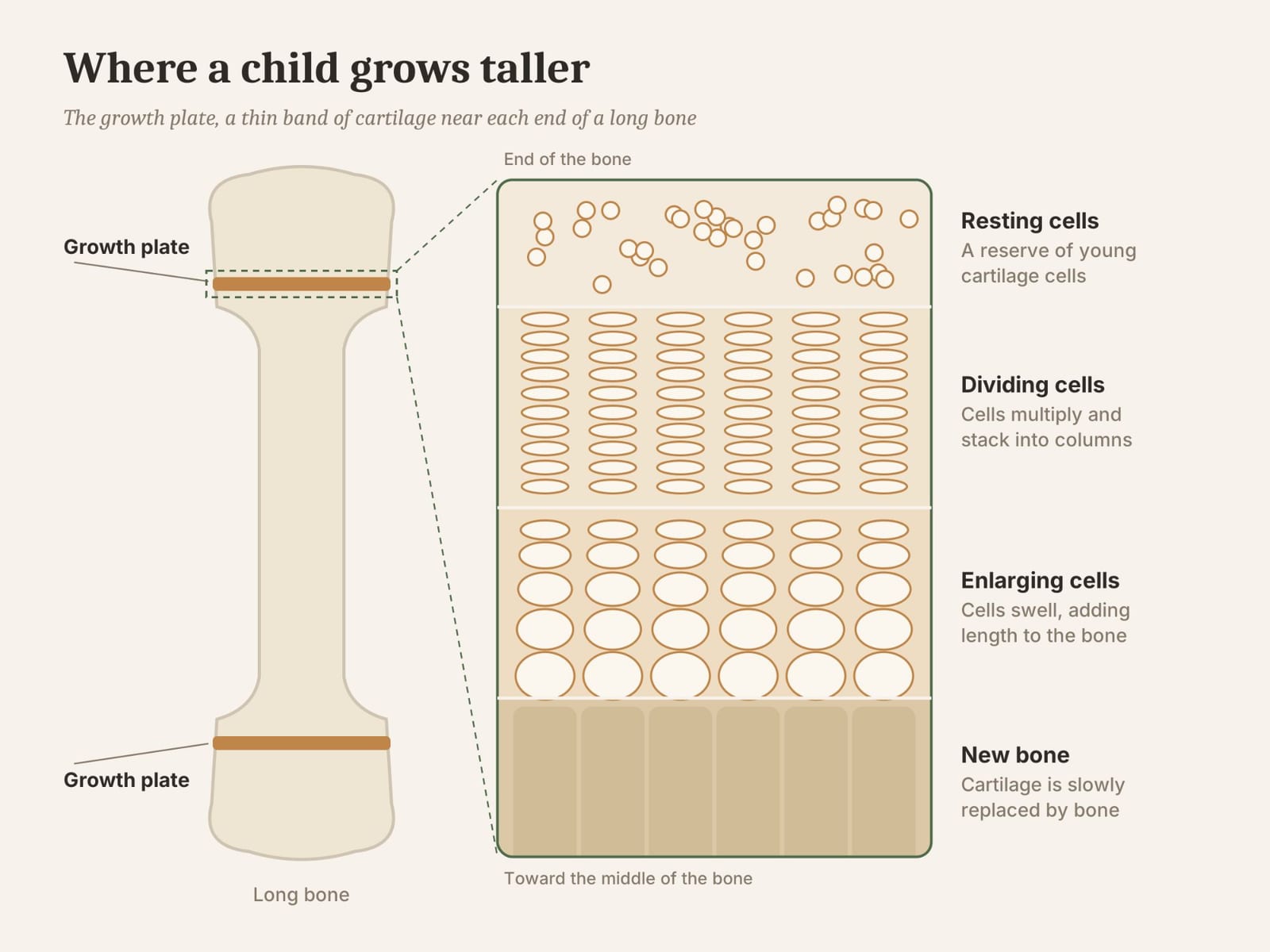
A child grows taller at the ends of the long bones, in a thin band of cartilage called the growth plate. Cells there divide, enlarge, stack up in columns, and are slowly replaced by bone. Each column adds a little length. Over the years, the little adds up to a child who no longer fits last June's uniform.
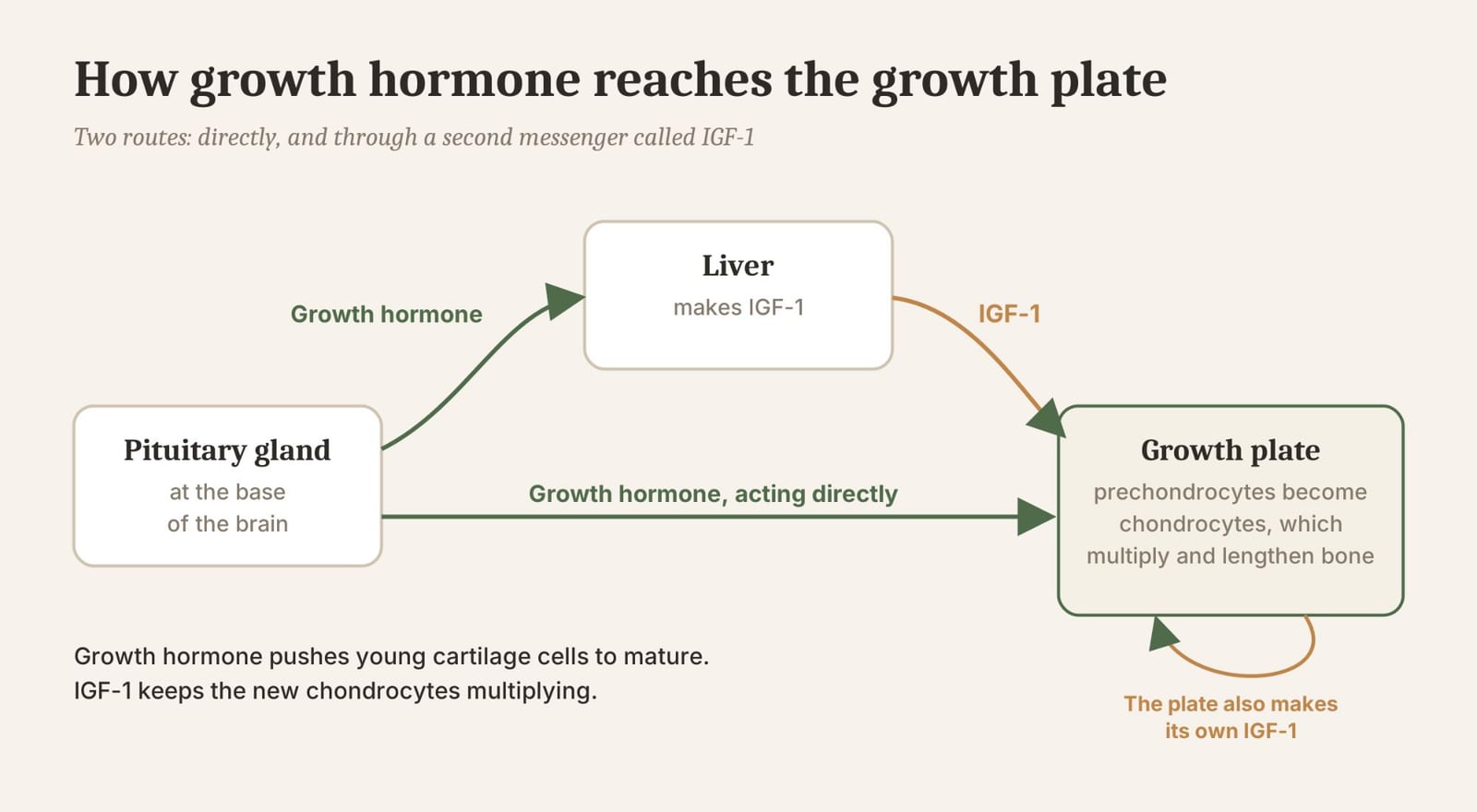
Growth hormone drives this. It acts directly on the young cartilage cells, the prechondrocytes, and pushes them to become chondrocytes, the cells that do the lengthening. It also signals the liver and the growth plate itself to make IGF-1, a second messenger that keeps those chondrocytes multiplying.
So the real question is not whether a child sleeps. It is when the body releases growth hormone.
The sleep connection
Growth hormone does not come out in a steady drip. It comes in pulses, and the biggest pulse of the whole day arrives within roughly the first hour after falling asleep.
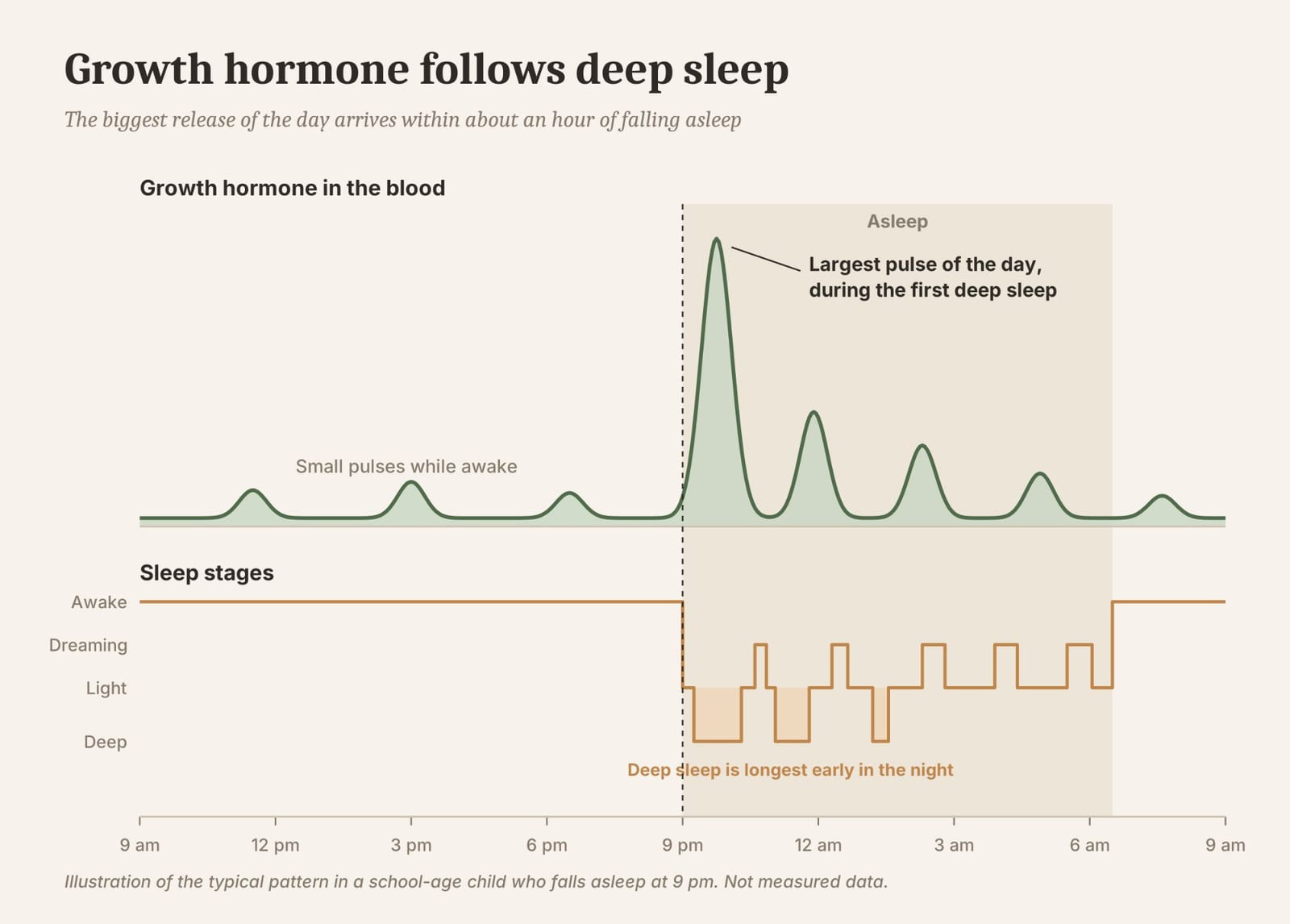
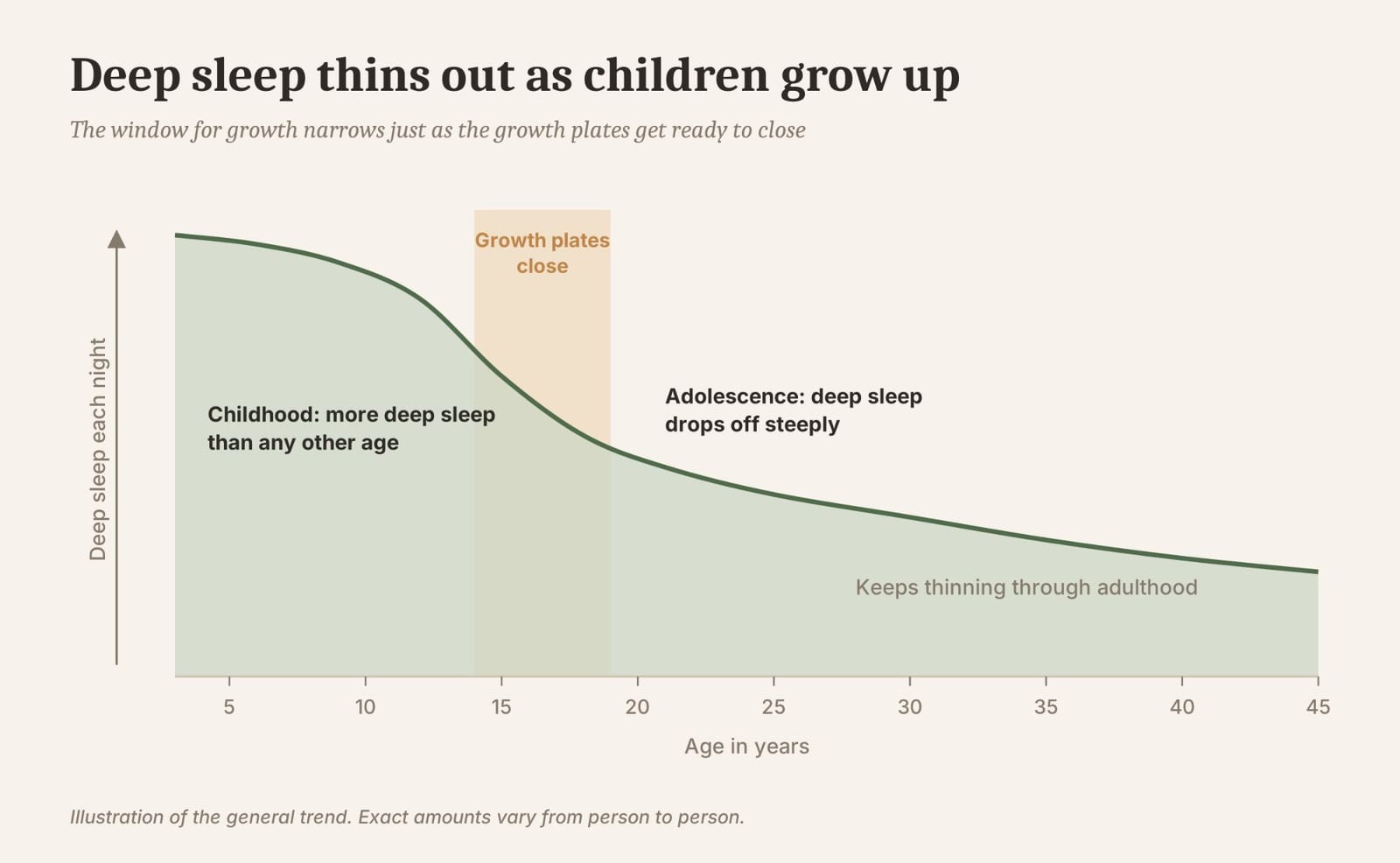
That pulse rides on deep sleep, the slow-wave stage, when the brain's electrical waves are long and slow and a person is hardest to wake. And children have more slow-wave sleep than any other age group. It is the sleep a parent sees when a child dozes off in the car and has to be carried inside, arms loose, not stirring at all.
That is not laziness. That is the window for growth, wide open.
Slow-wave sleep thins out through adolescence and keeps thinning through adulthood. The window narrows just as the growth plates are getting ready to close.
What my mother got wrong
The nap was never where my height was.
The largest release of growth hormone follows the first deep sleep of the night. For a school-age child, a full and unbroken night matters far more than an hour on the bed after lunch. Toddlers and preschoolers still need their daytime sleep. Older children mostly do not, provided the night is long enough.
And in my case, those afternoons may have done some good. A child who has run and shouted for four hours falls asleep quickly and sleeps deeply. I was, without knowing it, spending the afternoon preparing for the night.
What sleep cannot do
Sleep does not make a child taller than they were going to be. Height is set mostly by genetics, by the parents and grandparents the child came from, and then by nutrition: enough protein, enough calories, enough of the minerals bone is built from. A child who is chronically underfed will not sleep their way to their full height.
What adequate sleep does is let a child reach the height those two have already allowed. It does not add to it. A child who sleeps too little, for too long, may simply fall short of it.
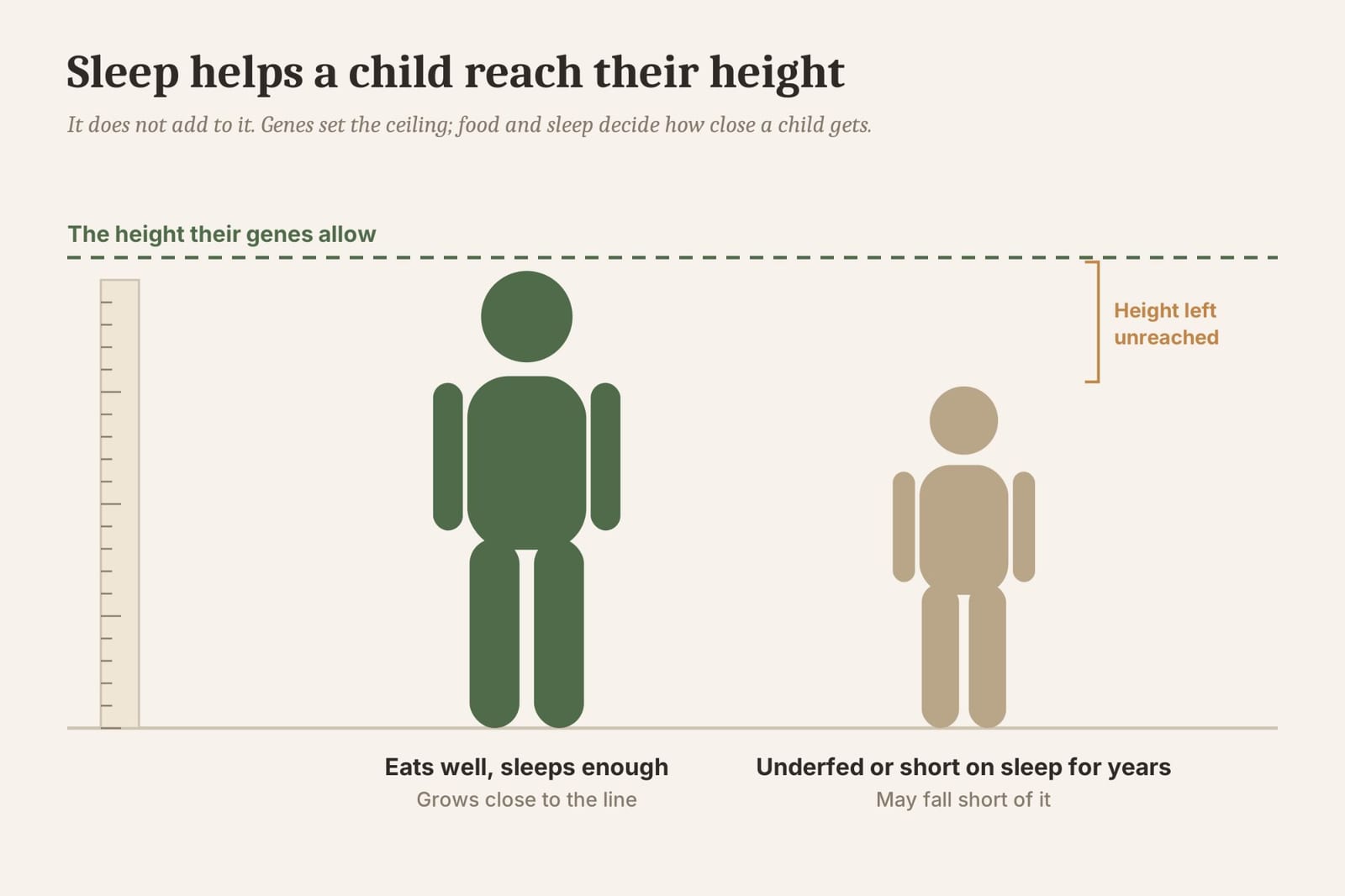
That is a smaller promise than the one my mother made. It is also a truer one.
How much, and when to look closer
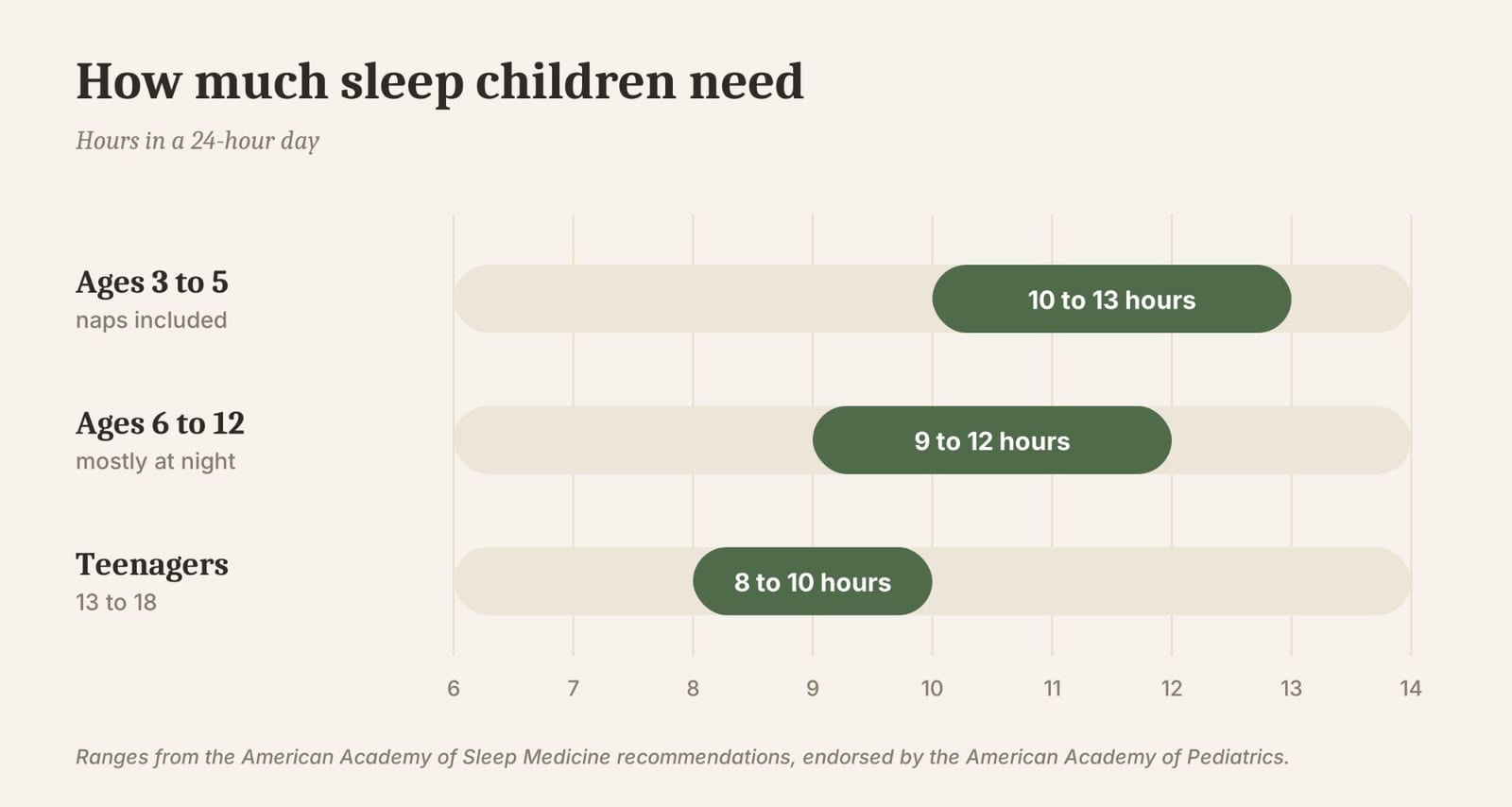
Ages 3 to 5. Ten to thirteen hours in a day, naps included.
Ages 6 to 12. Nine to twelve hours, mostly at night.
Teenagers. Eight to ten hours, which very few of them get.
Play looks different now. Much of it happens indoors, sitting down, on a screen, and often late into the evening. The light from a phone or tablet pushes back the time a child falls asleep, and a child who was never tired from the day does not fall into deep sleep easily. It is worth getting them outside, and worth taking the screen away an hour before bed.
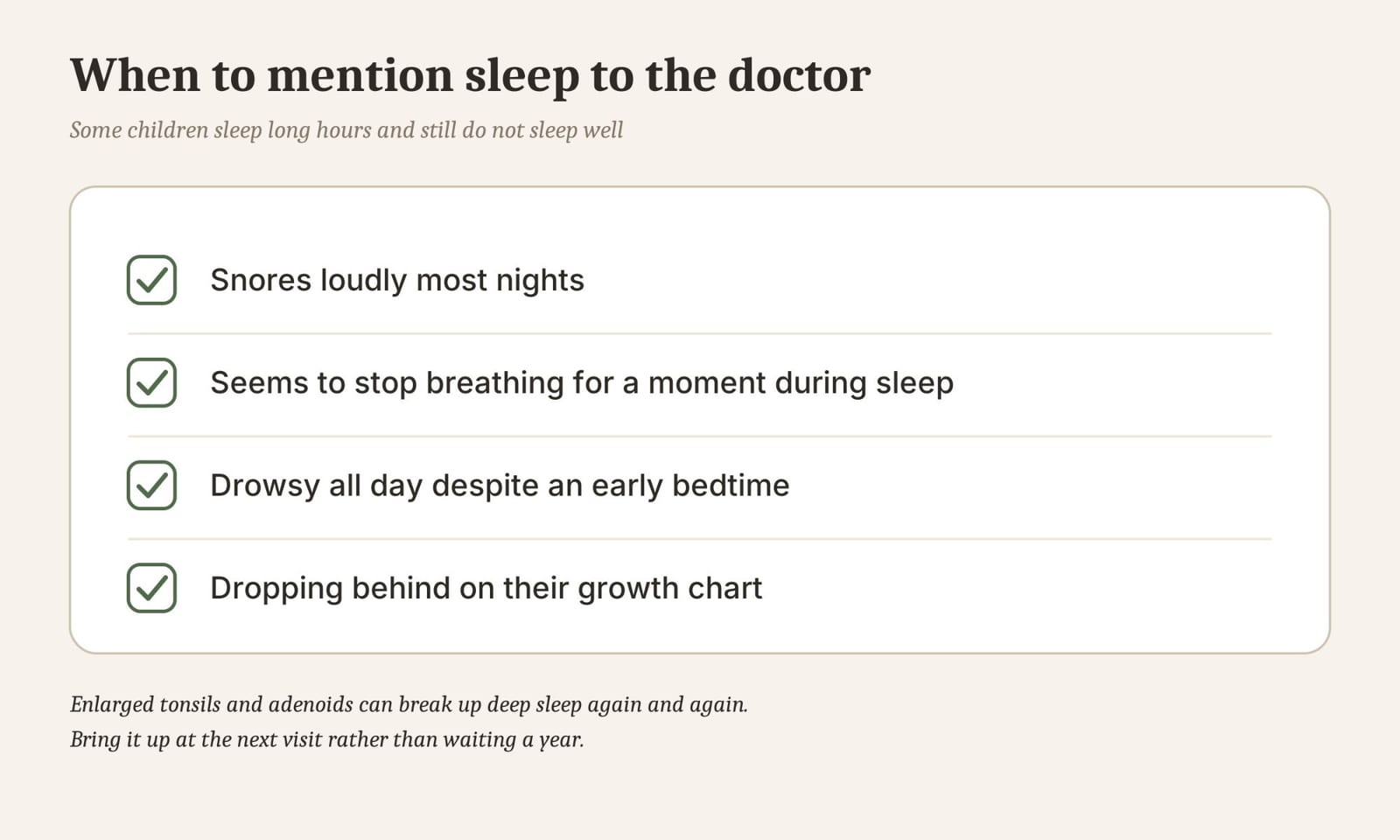
Some children sleep long hours and still do not sleep well. A child who snores loudly most nights, seems to stop breathing for a moment in sleep, or is drowsy all day despite an early bedtime should be checked. Enlarged tonsils and adenoids can break up deep sleep again and again, and growth can slow because of it. If a child is also dropping behind on their growth chart, bring it up at the next visit rather than waiting a year.
I never did take those naps.
I grew anyway, as far as my genes and my mother's table would take me. The nights did the rest.
Comments
No comments yet. Be the first to write to Dra. Amy.
Leave a comment