Advantages, drawbacks, pairings, and what it actually does to your gut microbiome
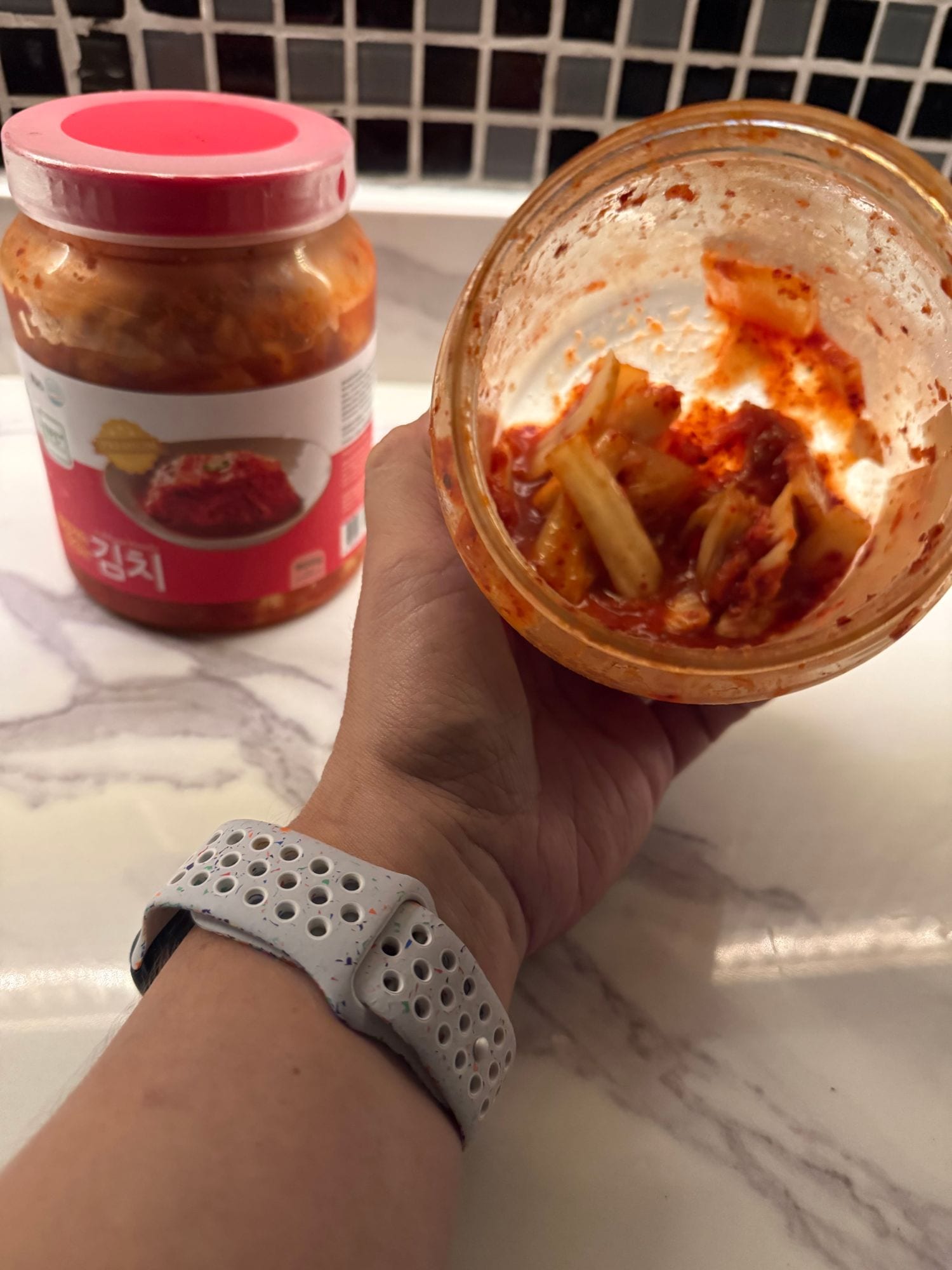
Very few foods on a dinner table are still alive. Kimchi is one of them. What sits in that jar is not a preserved vegetable in the way a pickle in vinegar is preserved — it is an active, ongoing microbial fermentation that keeps changing week after week in the refrigerator. That living quality is the reason kimchi is interesting nutritionally, and it is also the reason it comes with a few genuine caveats. If your family already loves it, the goal is not to talk anyone out of it. The goal is to understand what it is doing, so you can lean into the benefits and manage the one or two things worth managing.
What Kimchi Actually Is
Kimchi begins with salt. Napa cabbage (or radish, cucumber, or mustard greens) is brined, which draws out water and creates a selective environment: most spoilage organisms cannot tolerate the salt concentration, but a particular family of salt-tolerant lactic acid bacteria can. Those bacteria — mainly species of Leuconostoc, Lactobacillus, Lactiplantibacillus, and Weissella — are already present on the vegetables and in the seasonings. Given no oxygen and plenty of sugar, they ferment the vegetable’s carbohydrates into lactic acid.
That acid is the engine of everything that follows. It drops the pH to roughly 4.0 to 4.5, which preserves the vegetable, creates the sour tang, and produces a long list of secondary compounds along the way: bacteriocins, short-chain fatty acids, organic acids, and bioactive peptides. The seasoning paste — gochugaru, garlic, ginger, scallion, and usually a fermented seafood element such as salted shrimp or fish sauce — contributes its own chemistry. The result is a food whose composition on day three is measurably different from its composition on day thirty. Fresh kimchi is crisp and mild; fully fermented kimchi is sour, softer, and richer in both acid and bacteria.
The Advantages
The nutritional case for kimchi is strong and rests on several independent legs. Start with the obvious: it is a vegetable dish, and a dense one. A modest serving delivers meaningful fiber along with vitamin C, vitamin K, folate, beta-carotene, and potassium, all for very few calories. Fermentation does not destroy these; in several cases it improves their availability, because the bacteria partially break down the plant cell walls and antinutrients that would otherwise limit absorption.
Then there is the fiber-plus-bacteria combination, which is the part that matters most. Kimchi is unusually rich in bioactive compounds. Garlic contributes allicin and related organosulfur compounds. Chili contributes capsaicin. The cabbage itself contributes glucosinolates, the same family of compounds that makes cruciferous vegetables interesting to cancer researchers. Fermentation adds isothiocyanates and a range of antioxidant metabolites that were not present in the raw ingredients.
Finally, there is the practical advantage that nutrition research rarely captures: kimchi makes vegetables desirable. A household that keeps kimchi on the table eats more cabbage, garlic, and chili than one that does not, without anyone having to be persuaded. That is not a small thing.
Kimchi and the Gut Microbiome
This is where kimchi earns its reputation, and it is worth being precise about the mechanism, because the popular explanation is only partly right.
The popular version says: kimchi contains probiotics, you eat them, they colonize your gut, your microbiome improves. The reality is more interesting and somewhat less tidy. Kimchi does contain live lactic acid bacteria in large numbers — well-fermented kimchi can carry populations comparable to a commercial probiotic supplement. Certain isolated kimchi strains, particularly Lactiplantibacillus plantarum and several Lactobacillus and Weissella species, have demonstrated real acid and bile tolerance in laboratory testing, meaning a fraction of them survive the stomach and reach the colon alive. But permanent colonization is rare. Most of these organisms are transient visitors. They pass through, and if you stop eating kimchi, they largely disappear from your stool within weeks.
Transient does not mean useless. A visiting microbe still ferments, still competes, and still secretes. While passing through, kimchi bacteria produce lactic acid and bacteriocins that suppress less desirable organisms, they generate short-chain fatty acids — butyrate above all — that colonocytes use as their primary fuel and that regulate gut barrier integrity and inflammatory signaling, and they interact directly with gut-associated lymphoid tissue, which is the plausible route by which a food eaten daily could shift T-cell behavior. Think of it less as planting a garden and more as a daily delivery of gardeners.
Equally important, and often overlooked, is that kimchi is a fermented food that is also a high-fiber food. The cabbage and radish supply fermentable substrate that feeds the bacteria you already have — your resident Bifidobacterium and butyrate producers. In microbiome terms, kimchi is simultaneously a probiotic and a prebiotic, and the prebiotic half of that equation is probably doing more of the long-term work than the probiotic half. The vegetable matter persists in your colon and feeds your own microbes long after the imported bacteria have washed out.
One practical consequence follows directly from this biology: heat kills it. Kimchi jjigae and kimchi fried rice are wonderful, and they retain the fiber, the vitamins, and the bacterial metabolites already produced during fermentation — but the live organisms do not survive cooking. If the microbiome benefit is the goal, some of the household’s kimchi should be eaten cold and raw. A second consequence: pasteurized, shelf-stable kimchi sold at room temperature has been heat-treated and contains no live cultures. Buy the refrigerated kind, or better, make your own.
The Disadvantages
The single real drawback is sodium. Salt is not an optional seasoning in kimchi — it is the mechanism that makes safe fermentation possible — so it cannot simply be removed. A typical 100-gram serving carries somewhere in the range of 500 to 1,200 milligrams of sodium, which is a substantial fraction of a day’s allowance for anyone managing hypertension, heart failure, or chronic kidney disease. For a healthy adult eating a normal side-dish portion, this is manageable. For someone eating large amounts daily on top of an already salty diet, it is not.
Most commercial kimchi contains salted shrimp or fish sauce, making it unsuitable for vegetarians and a hazard for anyone with a shellfish allergy unless a vegan version is specified.
Sudden large amounts can cause gas and bloating while the gut adjusts, which argues for starting small.
What to Eat It With
Kimchi is a condiment doing the work of a sauce. It contributes acid, salt, heat, umami, and crunch simultaneously, which makes it the natural partner for anything rich, fatty, starchy, or bland. The general principle: wherever a dish needs a sharp counterweight, kimchi will supply it.
Pair it with any of the following:
Steamed white rice
The plainest partner and still the best. Neutral starch buffers the salt and chili, and the rice picks up the brine like a sponge. This is the baseline every other pairing is measured against.
Fried or scrambled eggs
Fat and sulfur compounds in egg soften kimchi’s acidity. A fried egg over kimchi fried rice is a complete, five-minute dinner.
Grilled or roasted pork
The classic. Kimchi’s acid cuts through pork belly, samgyeopsal, lechon kawali, or crisp bacon, resetting the palate between rich bites.
Tofu and soybean dishes
Silken tofu with fresh kimchi (dubu kimchi) is a whole dish. Kimchi also lifts sinigang-adjacent soups and any miso or doenjang broth.
Noodles and ramen
A spoonful stirred into instant ramen or pancit canton adds depth that no seasoning packet can match.
Cheese and butter
Unexpected but excellent. Kimchi grilled cheese, kimchi on buttered toast, or folded into a quesadilla — dairy fat tames the heat and the funk.
Seafood
Grilled fish, shrimp, and canned tuna all work. Kimchi tuna fried rice is a pantry staple for a reason.
Avocado and leafy salads
Chopped fine, kimchi becomes a dressing. Its brine replaces vinegar and salt in a vinaigrette.
Filipino comfort food
Try it alongside adobo, tapsilog, or grilled bangus. It plays the same role suka or atchara plays — a sharp counterweight to fat and rice.
A word on aging, since it changes what kimchi is good for. Young, freshly made kimchi is crunchy and only mildly sour — eat it raw as a side dish, in salads, or in wraps. Kimchi that has fermented for several weeks turns markedly sour and soft; it is past its best raw but it is exactly what you want for jjigae, fried rice, pancakes, and braises. Nothing is wasted. Sour kimchi is not spoiled kimchi, it has simply graduated to cooking duty.
The Practical Balance
For a family that already enjoys kimchi, the guidance is straightforward. Treat it as a side dish rather than a main volume item — roughly 50 to 100 grams a day, which is a few generous forkfuls, captures most of the benefit while keeping the sodium load reasonable. Keep some of it raw so the live cultures actually arrive. Buy refrigerated rather than shelf-stable, and read the sodium panel, since brands vary widely. Balance the sodium across the rest of the day rather than layering kimchi on top of an already salty meal, and lean on potassium-rich foods, which help offset it. If anyone in the household has hypertension, kidney disease, an active ulcer, or takes warfarin or an MAOI, the amount is worth a conversation with their physician regarding dietary sodium and fermented foods — not because kimchi is dangerous, but because it is potent enough to be worth accounting for.
Kimchi is a genuinely functional food: fiber, micronutrients, plant bioactives, and a daily dose of living bacteria in one inexpensive jar, with credible evidence for effects on gut ecology, metabolic markers, and immune regulation. Its one meaningful liability is salt, and salt is a dose problem, not a food problem. Eaten the way it is traditionally eaten — as a small sharp accent alongside rice and something rich, few times a day but never in bulk — it lands firmly on the beneficial side of the ledger.
Note: This is general nutrition information, not individual medical advice.
Comments
No comments yet. Be the first to write to Dra. Amy.
Leave a comment